

CEED 2026 Question Paper PDF with Answer Key: Download and Analysis
Preparing for the Common Entrance Examination for Design (CEED)? Practising the CEED 2026 question paper is a useful way to understand the examination format, evaluate your design aptitude and identify areas that need improvement before CEED 2027.
SILICA Institute provides access to CEED Previous Year Question Papers and sample papers to help students practise design aptitude, visual reasoning, analytical thinking, sketching and creative problem-solving.
Download the CEED 2026 question paper and answer key from the official examination resources, then use the paper to assess your preparation for both Part A and Part B.
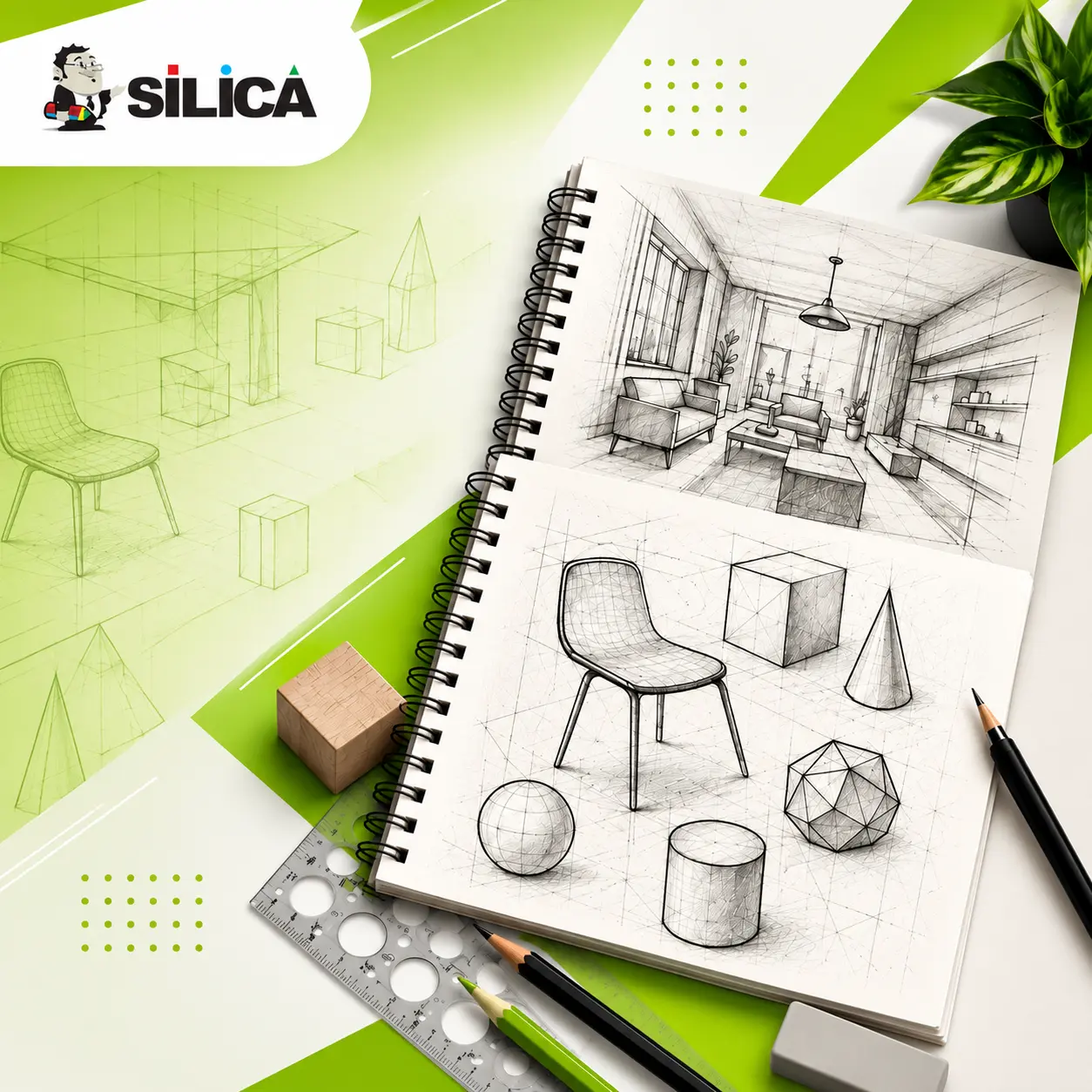
CEED 2026 Question Paper PDF Download
The CEED 2026 question paper is an important practice resource for candidates preparing for postgraduate design entrance examinations. It helps you become familiar with the style of questions, understand the skills assessed and practise solving problems within a fixed time.
Use the following resources to access the examination paper and answer key.
| Resource | Action |
|---|---|
| CEED Previous Year Question Papers | Explore year-wise papers on SILICA |
| CEED Sample Papers for 2027 Preparation | Practise CEED sample papers |
Note: The official CEED website is the source for the examination paper and official answer key. The final Part A answer key is not a substitute for an evaluated Part B response.
CEED 2026 Exam Pattern: Key Highlights
CEED assesses design aptitude through objective questions and practical, descriptive design tasks. Candidates should understand both sections before beginning full-length practice.
| Exam component | Details |
|---|---|
| Part A | Computer-based objective examination |
| Part B | Drawing, visualisation and design-related responses |
| Total examination duration | 3 hours |
| Part A duration | 1 hour |
| Part B duration | 2 hours |
| Part A maximum marks | 150 |
| Part B maximum marks | 100 |
| Total maximum marks | 250 |
Refer to the official CEED website for the applicable examination documents and marking rules.
CEED 2026 Part A: Topics to Review
Part A evaluates the analytical and visual skills needed for design education. While reviewing the 2026 paper, group your mistakes by topic rather than simply counting correct answers.
1. Visual and spatial reasoning
Practise identifying patterns, understanding shapes, mentally rotating objects and interpreting two-dimensional and three-dimensional forms.
2. Logical reasoning
Work on sequences, relationships, visual logic and problems that require multiple steps to reach a conclusion.
3. Observation and visual interpretation
Train yourself to notice small differences, understand visual relationships and interpret information presented through images or diagrams.
4. Design aptitude
Review product functionality, ergonomics, everyday design problems, visual communication and the relationship between form and function.
5. Quantitative and analytical reasoning
Practise numerical problems, geometric reasoning and other analytical questions relevant to the official examination syllabus.
Preparation tip: Record the topic, your answer, the correct answer and the reason for each mistake. This creates a more useful revision plan than repeatedly attempting questions without reviewing them.
CEED 2026 Part B: Skills to Practise
Part B requires candidates to communicate ideas through visual responses and design-oriented problem-solving. Good preparation involves more than drawing accurately; your concepts must also be understandable, relevant and appropriately presented.
Focus on these areas while reviewing previous papers:
- Sketching and observation: Practise drawing people, objects and everyday environments with suitable proportions and perspective.
- Creativity and ideation: Develop multiple possible solutions before selecting the strongest concept.
- Visual communication: Use clear sketches, layouts, symbols and visual sequences to communicate an idea.
- Form and function: Explore how the shape of a product can support its purpose and usability.
- Problem identification: Observe real-world situations, identify user difficulties and suggest practical design improvements.
After attempting each Part B question, review the clarity of your concept, relevance to the task, composition, proportions and quality of visual explanation.
How Difficult Was the CEED 2026 Question Paper?
Rather than relying on a single difficulty rating, evaluate the paper according to your own performance and the skills required to solve each question.
| Area | What to evaluate |
|---|---|
| Visual reasoning | Accuracy and speed when interpreting shapes and patterns |
| Logical reasoning | Ability to identify relationships and solve multi-step problems |
| Observation | Attention to detail and recognition of visual differences |
| Design aptitude | Ability to connect design principles with practical situations |
| Sketching | Proportion, perspective, composition and clarity |
| Creative problem-solving | Originality, relevance and feasibility of proposed solutions |
| Time management | Ability to complete questions without compromising response quality |
The paper may feel more challenging when you spend too long on individual questions or approach Part B without a clear plan. Use your timed practice results to determine which areas require additional work.
CEED 2026 vs Previous Year Question Papers
Solving papers from multiple years helps you understand the range of questions used in the examination. It also prevents you from preparing around the topics of a single paper.
| Practice resource | How to use it |
|---|---|
| CEED 2026 paper | Establish a recent benchmark for your preparation |
| CEED 2025 paper | Compare your performance across two examination years |
| CEED 2024 paper | Practise additional question formats and assess consistency |
| Older CEED papers | Build familiarity with a wider range of aptitude and design problems |
| CEED sample papers | Practise targeted questions and work on identified weaknesses |
Access the CEED previous year question papers and sample papers on SILICA for year-wise practice.
How to Prepare for CEED 2027 Using the 2026 Paper
Follow this five-step practice method to make your preparation more effective.
Step 1: Attempt the paper under timed conditions
Set aside the appropriate time for each section. Avoid checking answers while solving the paper.
Step 2: Check your Part A answers
Use the official final answer key to verify your responses. Apply the marking scheme for the relevant examination year when calculating your score.
Step 3: Review your Part B responses
Assess whether your sketches communicate the intended idea. Review composition, perspective, visual clarity, originality and the relevance of your solution.
Step 4: Maintain an error log
Create a record of questions you answered incorrectly, topics that took too long and design tasks that you found difficult.
Step 5: Repeat and compare
Practise another previous year paper after revising your weak areas. Compare your accuracy, time management and quality of design responses.
Why Practise CEED Papers with SILICA Institute?
SILICA Institute provides CEED preparation resources for students working towards design entrance examinations.
Use the available learning resources to:
- Practise previous year question papers and sample questions.
- Become familiar with the examination format.
- Identify areas that need additional practice.
- Develop visual reasoning and analytical problem-solving skills.
- Improve sketching, ideation and visual communication through regular practice.
Explore CEED sample papers and learn more about CEED entrance exam preparation at SILICA.
Frequently Asked Questions
1. Where can I download the CEED 2026 question paper PDF?
You can access the CEED 2026 question paper through the official CEED website. You can also explore previous year papers and sample papers through SILICA Institute's CEED resources.
2. Where can I find the CEED 2026 answer key?
The official final Part A answer key is available in the CEED 2026 answer key PDF.
3. Is the CEED 2026 question paper useful for CEED 2027 preparation?
Yes. It provides a recent reference for question formats, examination timing and the skills assessed. Combine it with other previous year papers, sample questions and the current official examination information.
4. What are the two sections of CEED?
CEED consists of Part A, which is a computer-based objective examination, and Part B, which assesses design-related responses through drawing and other visual or descriptive tasks.
5. How should I analyse my CEED question paper score?
Check your Part A answers against the official answer key and apply the relevant marking scheme. For Part B, review your approach, clarity of communication, composition, problem-solving and use of time.
6. Can I prepare for CEED by solving previous year question papers?
Previous year papers are an important part of preparation. Combine them with syllabus-based study, timed mock tests, sketching practice, design exercises and regular review of mistakes.
7. Where can I find more CEED sample papers?
Visit the SILICA Institute CEED sample papers page to explore year-wise question papers, answer-key resources and additional practice material.
Important: Always check the latest official CEED information brochure for the applicable examination pattern, marking scheme and admission requirements.
CEED Online Mock Test
Enquire Now
Please fill the form below.
